
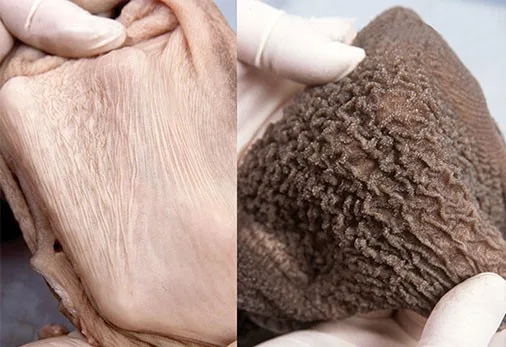
The rumen is one of the most important parts of a sheep or cow’s digestive system. It’s what allows these animals to turn pasture, hay, silage and other fibrous feeds into nutrients they can use for growth, reproduction and milk production.
But how does the rumen actually work? And why does its development and function play such an important role in livestock performance?
For Canadian cattle and sheep producers, understanding the rumen helps explain how livestock extract energy from forage, why feed quality matters and how good nutrition supports animal performance throughout the year.
What is the rumen?
Sheep and cattle are known as ruminants, meaning they have a specialized digestive system designed to break down fibrous plant material.
Unlike humans, which have a single-chambered stomach, sheep and cattle have one stomach divided into four compartments:
- Rumen: The largest compartment, where microorganisms ferment feed and produce nutrients the animal can use.
- Reticulum: Works closely with the rumen, helping mix feed and move larger particles back to the mouth for further chewing.
- Omasum: Helps absorb water and other substances before feed moves to the next compartment.
- Abomasum: Known as the ‘true stomach’, where digestive acids and enzymes break down feed and microorganisms.
The rumen is the largest of these compartments and plays a central role in the digestive process.
Think of it as a large fermentation tank, filled with billions of microorganisms, commonly called rumen bugs.
These microorganisms include bacteria, protozoa and fungi. They work together to break down plant fibres, starches and other feed components that the animal would otherwise struggle to digest.
This is what gives sheep and cattle their remarkable ability to turn pasture and forage into meat, milk and wool.
How does the rumen work?
When a sheep or cow eats pasture, hay, silage or supplementary feed, it is chewed, swallowed and enters the rumen and reticulum.
Inside the rumen, microorganisms begin breaking down the feed through a process called fermentation.
Unlike digestion in the human stomach, which relies heavily on acids and enzymes, the rumen relies on microorganisms to break down much of the feed before it reaches the animal’s true stomach.
During fermentation, rumen microorganisms convert carbohydrates from the feed into compounds called volatile fatty acids (VFAs).
These VFAs are absorbed through the rumen wall and provide a major source of energy for the animal.
The three main volatile fatty acids
1. Acetic acid (acetate)
Acetate is produced largely when rumen microorganisms break down fibre from pasture, hay and other forages.
It provides energy and plays an important role in fat production, including milk fat.
2. Propionic acid (propionate)
Propionate is produced when microorganisms ferment carbohydrates, particularly starches and sugars.
It is absorbed and transported to the liver, where it is used to produce glucose, an important energy source for the animal.
3. Butyric acid (butyrate)
Butyrate is particularly important for rumen development.
It provides energy to the cells lining the rumen wall and stimulates the growth of tiny projections called papillae, which help the animal absorb nutrients.
Together, these three VFAs provide a significant proportion of the energy sheep and cattle need to grow, maintain body condition and produce milk.
What happens to protein in the rumen?
The rumen does more than produce energy.
Microorganisms also use available nitrogen and energy from feed to grow and reproduce. As they multiply, they produce what is known as microbial protein.
When these microorganisms eventually pass out of the rumen and through the rest of the digestive system, they are digested, providing valuable protein to the animal.
This is another reason why having an active and well-functioning rumen is so important.
Why do sheep and cattle chew their cud?
One of the most recognizable behaviours of ruminants is chewing their cud.
You may have noticed sheep or cattle resting in the pasture while repeatedly chewing, even though they aren’t actively grazing.
This process is called rumination.
During rumination, partially digested feed is brought back up from the rumen and reticulum into the mouth, where it is chewed again before being swallowed.
This process serves two important purposes.
Firstly, it breaks larger pieces of forage into smaller particles, increasing the surface area available for rumen microorganisms to digest.
Secondly, chewing stimulates saliva production.
Ruminant saliva contains natural buffering compounds, including bicarbonate, which help neutralize acids produced during fermentation.
This helps maintain a suitable rumen environment for the microorganisms responsible for digesting feed.
In simple terms, chewing the cud helps livestock break down their feed while supporting the conditions needed for effective rumen fermentation.
Why is rumen pH important?
For the rumen to function efficiently, the microorganisms living inside it need a suitable environment.
One of the most important factors is rumen pH, which measures how acidic the rumen contents are.
Fibre-digesting microorganisms generally function best when rumen pH is around 6–7, although normal pH varies depending on diet and feeding patterns.
When sheep and cattle consume large quantities of rapidly fermentable carbohydrates, such as cereal grains, microorganisms produce VFAs more quickly.
If acid production exceeds the rumen’s ability to absorb and buffer those acids, rumen pH can fall.
When rumen pH remains too low, fibre digestion may be reduced, microbial populations can become disrupted, and the risk of ruminal acidosis increases.
This is why feed composition, adequate effective fibre, gradual dietary changes and feeding management are important.
For a more detailed explanation of how supplementary feeding frequency can influence rumen function, see our information sheets on Dry Feed Supplementation – Sheep and Dry Feed Supplementation – Cattle.
How does the rumen develop in lambs and calves?
Although lambs and calves are born with a rumen, it is not yet fully developed or functioning like that of an adult animal.
In the earliest stages of life, young livestock depend primarily on milk for nutrition.
When they suckle, a special structure called the esophageal groove directs milk past the rumen towards the abomasum, where it can be digested.
As lambs and calves begin consuming solid feeds and drinking water, microorganisms establish themselves in the rumen and fermentation activity increases.
This stimulates important physical changes.
One of these is the development of rumen papillae, tiny finger-like projections covering the inside of the rumen wall.
These papillae increase the surface area available to absorb the VFAs produced during fermentation.
Butyrate, produced through fermentation of suitable starch-containing feeds, plays a particularly important role in stimulating papillae development.
Meanwhile, consuming fibrous feeds helps encourage rumen muscular development and rumination.
As the rumen develops, lambs and calves become increasingly capable of obtaining nutrients from pasture, forage and supplementary feeds rather than relying predominantly on milk.
This transition is an important part of preparing young livestock for weaning.
For more information about the science of early rumen development, see our Creep Feeding Information Sheet.
Why does a healthy rumen matter for livestock performance?
The rumen is responsible for converting much of the feed sheep and cattle consume into nutrients that support production.
When rumen microorganisms have the right conditions, they can effectively break down available feed and provide energy and microbial protein to the animal.
However, the nutritional quality and availability of pasture and forage can change significantly throughout the year.
Across Canada, cattle and sheep production systems vary depending on climate, region and farming practices. Many operations rely on pasture during the growing season and stored forages such as hay and silage during the colder months.
These seasonal changes can influence how livestock digest feed and how effectively they utilize available nutrients.
Spring and summer grazing
During spring and early summer, rapidly growing pasture can provide high-quality nutrition for livestock.
However, lush pasture may contain high levels of moisture and soluble protein, and some pastures may be low in physically effective fibre.
This can influence rumen fermentation, feed passage rate and nutrient utilization.
When diets lack sufficient effective fibre, rumination and saliva production may decrease, reducing the rumen’s natural buffering capacity.
Maintaining an appropriate balance of fibre, fermentable carbohydrates and available nitrogen helps support rumen microorganisms and effective digestion.
For more information, see our High Moisture Pasture Information Sheet.
Fall and winter feeding
As the grazing season ends, many Canadian livestock operations transition towards stored forages, including hay, silage and crop residues.
Some producers also extend grazing through stockpiled forage, swath grazing or bale grazing, depending on regional conditions.
The nutritional quality of these feeds can vary considerably.
Mature hay, straw and weathered forages may provide plenty of fibre but insufficient protein or energy to meet livestock requirements.
During periods of extreme cold, livestock energy requirements can increase, making it particularly important to ensure diets meet nutritional needs.
When forage quality is inadequate, carefully managed supplementation may be necessary to maintain body condition, support growth and meet the requirements of pregnant or lactating animals.
Regardless of the season, maintaining an appropriate balance between forage, fermentable carbohydrates and available nitrogen supports effective rumen function.
For example, adequate effective fibre encourages rumination, saliva production and the formation of a fibre mat within the rumen. This helps retain larger feed particles for further fermentation.
Having the right balance of energy and nitrogen also allows rumen microorganisms to produce microbial protein more effectively.
Understanding these processes helps Canadian producers make better decisions about pasture management, forage quality and supplementary feeding throughout the year.
Frequently Asked Questions About the Rumen
Do cows and sheep have four stomachs?
No. Sheep and cattle have one stomach with four compartments: the rumen, reticulum, omasum and abomasum. Each compartment has a different role in digesting feed and absorbing nutrients.
What is the main function of the rumen?
The rumen’s main function is to provide an environment where microorganisms ferment feed. This process breaks down fibre and other feed components, producing volatile fatty acids that supply much of the animal’s energy requirements.
How long does it take for a lamb or calf’s rumen to develop?
Rumen development begins when young animals start consuming solid feed and water. Microorganisms establish themselves during the first days and weeks of life, and the rumen progressively develops as solid feed intake increases.
Noticeable development of rumen papillae can occur within the first few weeks when calves consume suitable starter feeds. However, the time required to establish a functional rumen depends on diet, feed intake and management, rather than age alone.
What happens if the rumen becomes too acidic?
If acids accumulate and rumen pH remains too low, fibre-digesting microorganisms become less effective and digestion can be disrupted. More severe cases can lead to ruminal acidosis, which may affect feed intake, animal health and production.
Understanding the rumen helps make better feeding decisions
The rumen is an extraordinary digestive system that allows sheep and cattle to turn pasture, hay, silage and other fibrous feeds into valuable nutrients.
From the development of rumen papillae in young lambs and calves to the complex fermentation processes occurring in mature livestock, rumen function has a direct influence on how animals utilize their feed.
For Canadian producers, understanding how the rumen works is an important first step in making better decisions about livestock nutrition, pasture management, winter feeding and supplementary feeding.
At Advantage Feeders, we focus on helping producers maximize pasture and forage utilization and make better use of their available feed through practical, controlled feeding systems.
Explore our livestock feeding information sheets to learn more about the science behind effective supplementary feeding.